Turkey has established itself as a key player in the global sulfur market, offering a diverse range of sulfur products for industrial, agricultural, and chemical applications. With a strategic geographic location, modern production facilities, and a robust export infrastructure, Turkey provides significant opportunities for B2B buyers seeking reliable sulfur suppliers. In 2023, Turkey exported over $64 million worth of crude and unrefined sulfur, ranking as the 17th largest sulfur exporter in the world .
For businesses engaged in Sourcing from Turkey, understanding the dynamics of the Turkish sulfur market is crucial for making informed sourcing decisions. The country’s sulfur industry is supported by major producers like Özersoylar and Kimtar, who are known for their high-quality products and extensive export experience . This guide provides a comprehensive overview of sulfur export from Turkey, covering market data, leading suppliers, quality standards, and practical guidance for B2B buyers.
1. The Turkish Sulfur Market: An Overview
Turkey’s sulfur market is characterized by a strong production capacity, a diverse product range, and a growing export focus. The country’s strategic position allows for efficient distribution to markets in Europe, Africa, and the Middle East.
Market Size and Export Volume
Turkey’s sulfur exports have demonstrated consistent growth, with the country exporting over 407,000 metric tons of crude or unrefined sulfur in 2023 . This represents a significant volume, highlighting Turkey’s capacity to meet large-scale international demand. The country’s 1.28% share of global sulfur exports underscores its importance as a reliable sourcing destination .
Key Export Destinations
Turkish sulfur is exported to a wide range of countries, with a strong presence in African and European markets. The top export destinations in 2023 were:
- Tanzania: The largest importer of Turkish sulfur, accounting for 37% of Turkey’s total sulfur exports with a value of $23.9 million .
- Tunisia: A significant market with $8.69 million in imports.
- Egypt: An important regional market with $4.07 million in imports.
- Brazil: A key South American market with $3.53 million in imports.
- Ukraine: A growing European market with $3.48 million in imports.
2. Leading Turkish Sulfur Producers and Suppliers
Turkey is home to several world-class sulfur producers and suppliers known for their quality, reliability, and export expertise.
Major Producers
- Özersoylar: Turkey’s largest sulfur and petcoke producer and exporter. The company has an extensive portfolio of over 110 products and a strong international presence .
- Kimtar: A leading supplier of Turkish refined sulfur with over 20 years of experience in the commodity market. Kimtar is known for supplying high-quality Tüpraş sulfur .
- Brimstone: A specialized manufacturer of milled sulfur for the rubber and agriculture industries, with a modern production plant in İzmir .
- Tüpraş: Turkey’s largest industrial enterprise and leading refiner, producing high-quality sulfur as a byproduct of its refining operations .
- BAGFAŞ (Bandırma Gübre Fabrikaları A.Ş.): A major producer of sulfuric acid, with Turkey’s only sulfur-based processing facility using the double absorption contact process .
Reputable Exporters and Trading Companies
- Bekata: An import-export company specializing in the trade of granular sulfur and other commodities since 2014.
- Chemtrade International: A leading supplier and exporter of sulfur in Turkey, offering competitive pricing and a range of sulfur products .
3. Types of Sulfur Exported from Turkey
Turkish suppliers offer a variety of sulfur forms to meet diverse industrial and agricultural requirements.
Granular Sulfur
Granular sulfur is a popular form due to its ease of handling, low dust content, and consistent quality. It is widely used in the fertilizer industry for the production of phosphate fertilizers and as a soil amendment.
Lump Sulfur
Lump sulfur is a bulk form of sulfur that is often used in industrial applications, such as the production of sulfuric acid. It is typically transported in bulk and requires specialized handling equipment.
Micronized Sulfur
Micronized sulfur consists of very fine particles and is used in applications requiring high reactivity, such as in the rubber industry as a vulcanizing agent and in agriculture as a fungicide and nutrient.
Refined Sulfur
Refined sulfur has a high purity level and is used in specialized applications, including pharmaceuticals, cosmetics, and food production.
4. Quality Standards and Certifications
Turkish sulfur suppliers adhere to international quality standards to ensure their products meet the stringent requirements of global buyers.
ISO 9001:2015
Many leading Turkish sulfur producers are ISO 9001 certified, which guarantees that their production processes are subject to rigorous quality management systems. This certification ensures product consistency and reliability .
Product Specifications
High-quality sulfur from Turkey typically meets the following specifications:
- Purity: 99.5% – 99.9%
- Moisture Content: < 0.5%
- Ash Content: < 0.1%
- Acidity (as H2SO4): < 0.01%
These specifications ensure that the sulfur is suitable for a wide range of industrial and agricultural applications.
5. Logistics and Shipping for Sulfur Export
Efficient and safe logistics are paramount for the international transport of sulfur.
Packaging
Sulfur is packaged according to its form and the requirements of the buyer:
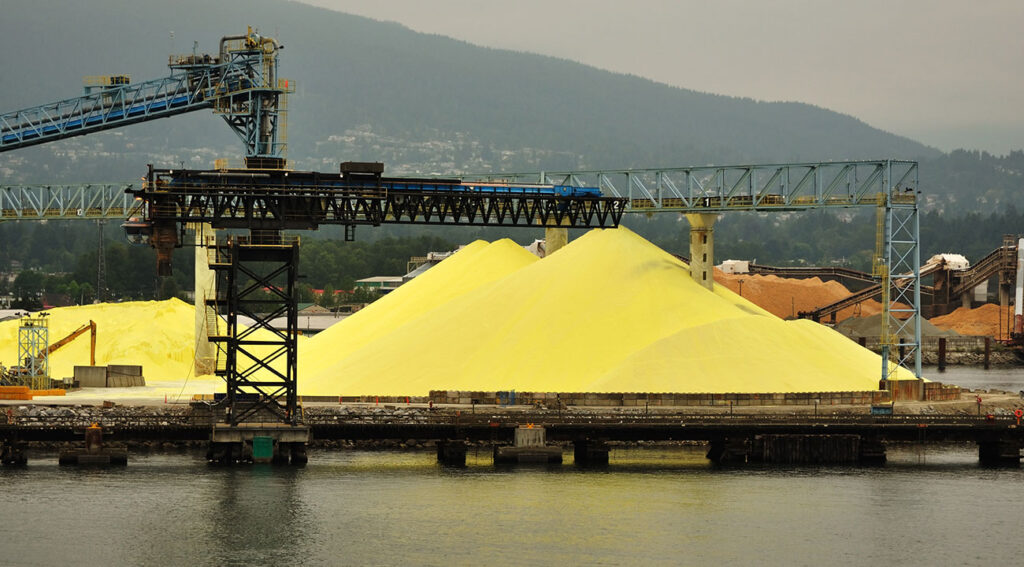
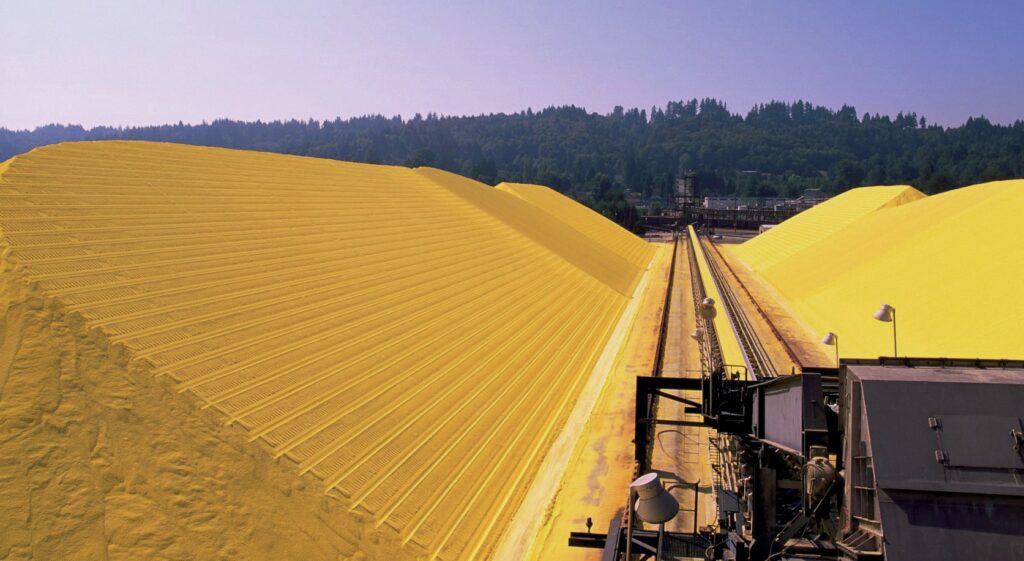
- Bulk: Lump and granular sulfur are often shipped in bulk in the holds of vessels.
- Big Bags (FIBCs): 1-1.5 metric ton bags are commonly used for granular and micronized sulfur.
- 50 kg Bags: Smaller bags are available for certain applications and smaller order quantities.
Shipping Methods
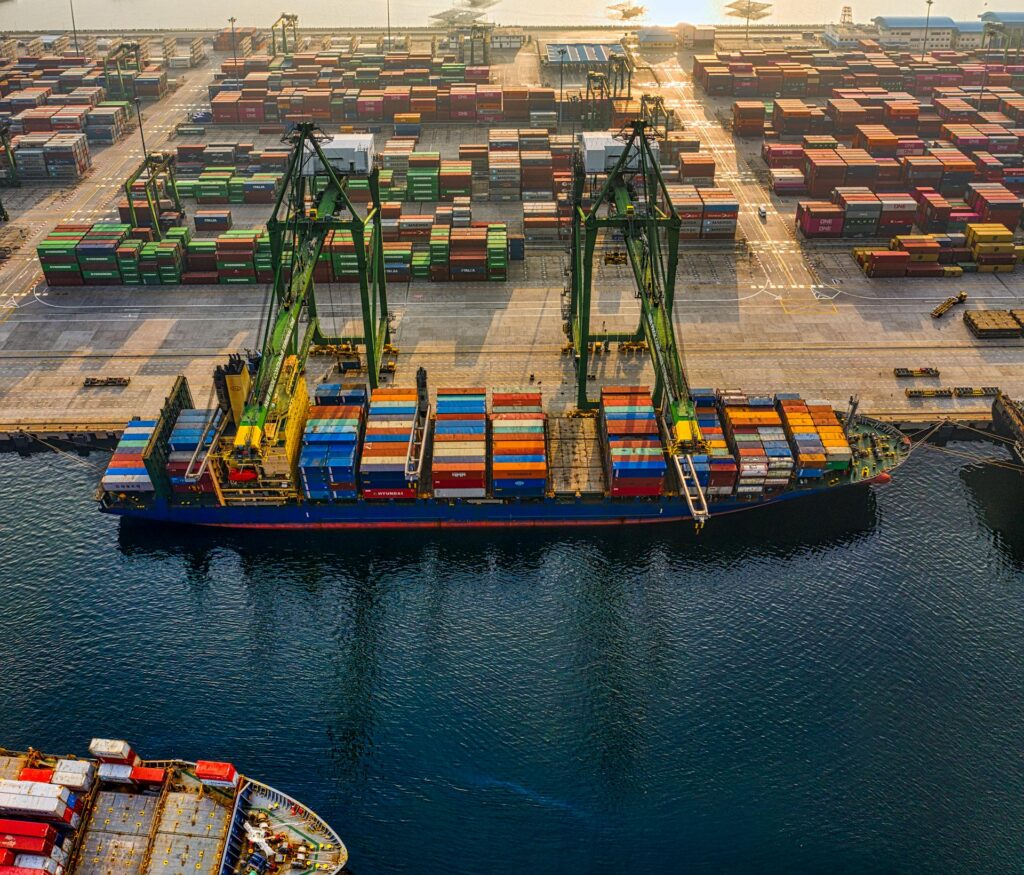
- Sea Freight: The primary method for exporting sulfur from Turkey. Both bulk carriers and container ships are used.
- Road and Rail: For shipments to neighboring countries in Europe and the Middle East.
Key Ports for Sulfur Export
- Port of İzmir (Aliağa): A major hub for chemical and petrochemical exports, with specialized terminals for handling sulfur.
- Port of Mersin: Strategically located for trade with the Middle East and Africa.
- Port of Gemlik (Bursa): An important port for industrial and agricultural exports.
6. How to Source Sulfur from Turkey
A systematic approach is key to successfully sourcing sulfur from Turkey.
1. Define Your Requirements
Clearly specify the type of sulfur (granular, lump, micronized), required purity, and packaging needs for your application.
2. Identify and Vet Suppliers
Use B2B platforms like PortYol, industry directories, and trade publications to find potential suppliers. Thoroughly vet each supplier by checking their export history, certifications, and customer references. Our guide on How to Find & Verify Turkish Suppliers offers a detailed framework for this process.
3. Request Quotations and Samples
Contact a shortlist of suppliers to request detailed quotations (FOB or CIF) and product samples. This will allow you to assess quality and compare pricing.
4. Negotiate and Finalize the Contract
Negotiate the terms of the contract, including price, payment terms (e.g., L/C, T/T), delivery schedule, and Incoterms. Ensure all terms are clearly documented in a legally binding agreement.
5. Oversee Logistics and Compliance
Work with an experienced freight forwarder to manage the logistics of your shipment. Ensure all necessary export documentation is correctly prepared in line with Turkish Export Regulations.
7. Frequently Asked Questions (FAQs)
Q: What is the price of sulfur from Turkey?
A: Sulfur prices are subject to global commodity market fluctuations. In late 2025, prices for granular sulfur were in the range of $300-$350 per metric ton (FCA)
Q: What is the minimum order quantity (MOQ) for sulfur exports?
A: MOQs vary by supplier and product form. For bulk shipments, the MOQ may be several thousand tons, while for bagged products, it is typically one container load (20-25 tons).
Q: Is a quality inspection recommended before shipment?
A: Yes, for large orders, it is highly recommended to arrange for a pre-shipment inspection by an independent third-party inspection company (e.g., SGS, Bureau Veritas) to verify quality and quantity.
Q: What are the main uses of sulfur exported from Turkey?
A: The primary uses are in the fertilizer industry (for phosphate fertilizer production), the chemical industry (for sulfuric acid production), and agriculture (as a fungicide and soil nutrient).
Q: Can I source different forms of sulfur from the same supplier?
A: Many large Turkish suppliers, such as Özersoylar and Kimtar, offer multiple forms of sulfur (granular, lump, micronized) to cater to different market needs
Q: How can I ensure the supplier meets environmental and safety standards?
A: Look for suppliers with ISO 14001 (Environmental Management) and ISO 45001 (Occupational Health and Safety) certifications. These demonstrate a commitment to responsible and safe operations
Conclusion
Sulfur export from Turkey presents a valuable opportunity for B2B buyers looking for a reliable and high-quality supply of this essential industrial and agricultural commodity. With its strong production base, diverse product range, and strategic export infrastructure, Turkey is a competitive player in the global sulfur market. By conducting thorough due diligence, working with reputable suppliers, and adhering to international trade practices, buyers can successfully navigate the sourcing process and build lasting partnerships with Turkish sulfur exporters.